DIAGRAM · CHAPTER 12
Triadic Grammar.
The minimum logical structure for any act of meaning-making: A thing, a sign, and an interpreter. This replaces the dyadic subject-object split with a functional triad.
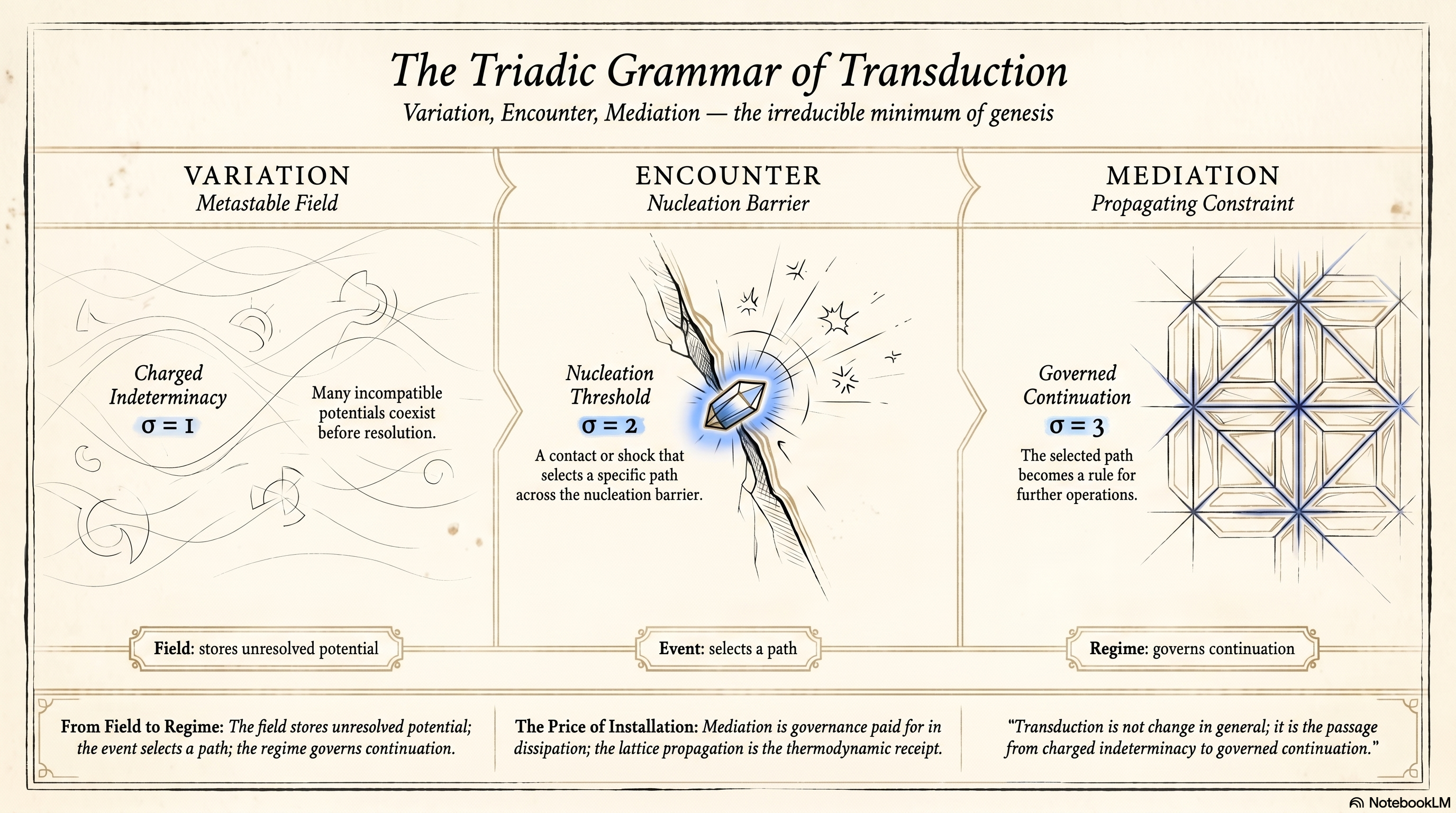
ATLAS PLATE
Triadic Grammar
The minimum logical structure for any act of meaning-making: A thing, a sign, and an interpreter. This replaces the dyadic subject-object split with a functional triad.
The one-sentence version
The triadic grammar names the logical minimum for meaning: you need a thing, a representation of that thing, and an interpreter capable of reading the representation as about the thing. Dyads are insufficient for semantics.
Where the term comes from
Peirce’s semiotics provides the foundational distinction between dyadic (stimulus-response) and triadic (sign-object-interpreter) relations. Ontogony argues that the symbolic exit occurs when a system offloads its interpretive work—when what was once accomplished by a living organism gets delegated to public record, institution, and sanction.
Why it matters
Understanding triadic grammar explains why symbolic systems require external scaffolding (writing, law, institution) to persist. It also explains why artificial systems that mimic surface-level symbolic behavior can do so without the interpretive closure that makes meaning matter.
- Chapter
- 12
- Book title
- The Symbolic Exit
- Collection
- Diagram