DIAGRAM · CHAPTER 01
The Grounding Problem.
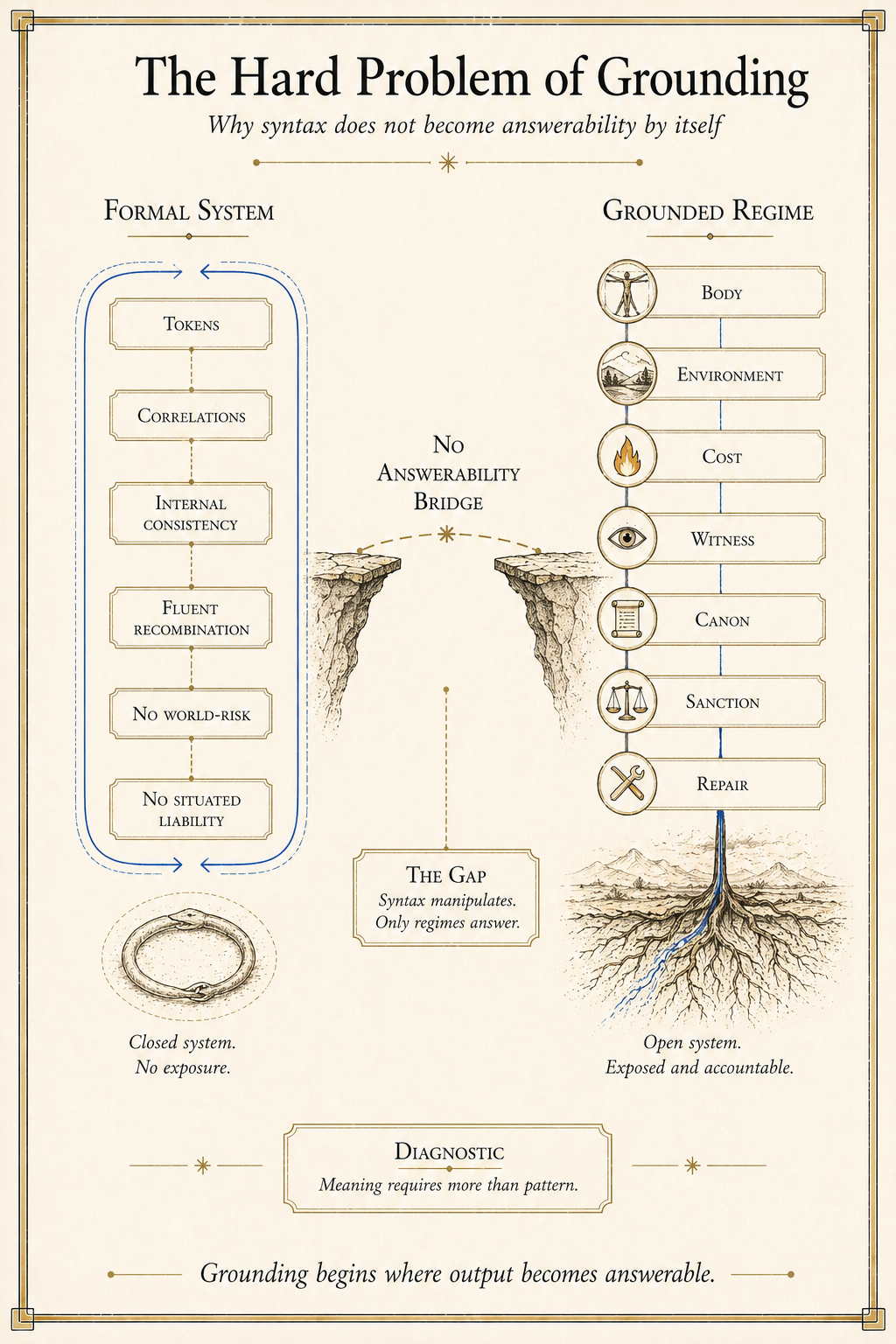
The hard problem of grounding asks: how do physical substrates acquire semantic content? Neither pure mechanism nor pure intentionality solve the binding between mind and world.
ATLAS PLATE
The Grounding Problem
The hard problem of grounding asks: how do physical substrates acquire semantic content? Neither pure mechanism nor pure intentionality solve the binding between mind and world.
The one-sentence version
The hard problem of grounding is the problem of how anything physical can mean anything at all. The gap between substrate and semantics persists across every philosophical tradition, from Descartes’ pineal gland to contemporary neuroscience.
Where the term comes from
The term “hard problem” invokes David Chalmers’ framing but applies it to a deeper question: not consciousness itself, but the precondition for consciousness—the binding between physical organization and semantic content. This is the classical binding problem of philosophy of mind.
Why it matters
Every theory of life, mind, or intelligence must answer: how does the physical system acquire the capacity to mean something beyond itself? This is the threshold at which ontogony begins.
- Chapter
- 1
- Book title
- The Hard Problem of Grounding
- Collection
- Diagram